I had heard secondhand accounts of disturbing right-wing tendencies of his. I had read Auden's poem saying Yeats would be forgiven because he wrote well. But it wasn't really clear to me what he would be forgiven for, until I read the selections from On the Boiler, originally published sometime in 1939 after Yeats had died in January of that year, which are collected in the volume Explorations, in which he very strongly favours eugenics, and has some positive things to say about "the Fascist countries," and declares that "the new-formed democratic parliaments of India will doubtless destroy, if they can, the caste system that has saved Indian intellect" (p 424), and poo-poos all suggestions that poor children would thrive given the advantages of the rich or that rich children would struggle facing the challenges of poverty. He deplores Socialist "slaughter" and appears not to have heard of Guernica or other right-wing slaughters. Having died just before the beginning of World War II, we cannot know how or if he would have responded to the horrors of the Holocaust or the slaughters perpetrated by Fascist Japan. But he does fantasize a bit about war to come, waged in favor of the upper classes and calls it a good thing, a healthy shock which will promote learning. World War II was indeed shocking, but not good. On the Boiler is shocking, but not in a good way.
On p 429 Yeats writes that
"I am philosophical, not scientific, which means that observed facts do not mean much until I can make them part of my experience."
Which sounds very nice at first, until one starts to wonder whether it was no more than a high-toned excuse to ignore whatever facts clashed with Yeats' cherished dreams. He was one of those Christians who dreamed of a chivalrous aristocracy which had little to do with the actual Medieval Europe and less with 20th-century fascism. The Nazi leadership was neither an aristocracy nor a meritocracy, and even if it had been aristocratic, one had to be quite blind indeed to miss all of the ill effects of inbreeding in the European ancien regime, worse than anything to be found in the most remote and backwards peasant village. The one criticism of fascism which Yeats offers in On the Boiler is that the fascists states rewarded fertility among all classes. Yeats' eugenics favored bigger families in the aristocracy and few or no children for peasants or proles. With remarkable blindness, Yeats guesses (p 424) that this fascist encouragement of big families in all classes occurred only because of some unspecified pressure from democratic states. The reality, as plain to see as anything could be, was that the Nazis and the Italian fascists, even with their own unrealistic idealizations of aristocracy, valued an ethnic German or Italian peasant much more highly than a Jewish or Russian prince, and quite possibly higher than an Irish prince as well, or even a Japanese prince.
Showing posts with label fascism. Show all posts
Showing posts with label fascism. Show all posts
Sunday, February 7, 2016

Wednesday, February 6, 2013
"McBain To Base: Under Attack From Commie Nazis!"
The Huffington Post showed this photograph of a billboard in Iowa as an example of right-wing nutjobs comparong Obama to Hitler:

The Huffington Post clearly takes issue with such comparisons. It's not at all clear, however, whether they mind a bit when someone compares Lenin to Hitler. Well, I object to it. And I think Stalin was much, much worse than Lenin, but I also object when someone compares Stalin, or Mao, to Hitler. (Comparisons of Pol Pot and Hitler are valid. If you can find a Marxist or a Leninist who thinks Pol Pot was just great, please let me know. If you know of any Stalinists still living, that also would be news to me.) If you think Stalin was as bad, or worse, than Hitler, I've said it before, I'll very likely say it again: get Stalin: A Political Biography by Isaac Deutscher, the 2nd edition from 1966, read pages 566 through 569 and then get back to us, and if you haven't changed your mind, tell us where you think Deutscher is wrong. (Go ahead and read the whole book while you're at it, and other things by Deutscher, it will do you no harm.) If you think either I or Deutscher is praising Stalin as a glorious hero and role-model, well, you just haven't been paying attention, and I'm mostly likely going to shift my attention to people who are paying attention.
And if you're one of those people who believe that Communist regimes have murdered 100 million people -- or if you believed it a decade ago and have revised that round number upward since then -- read this.
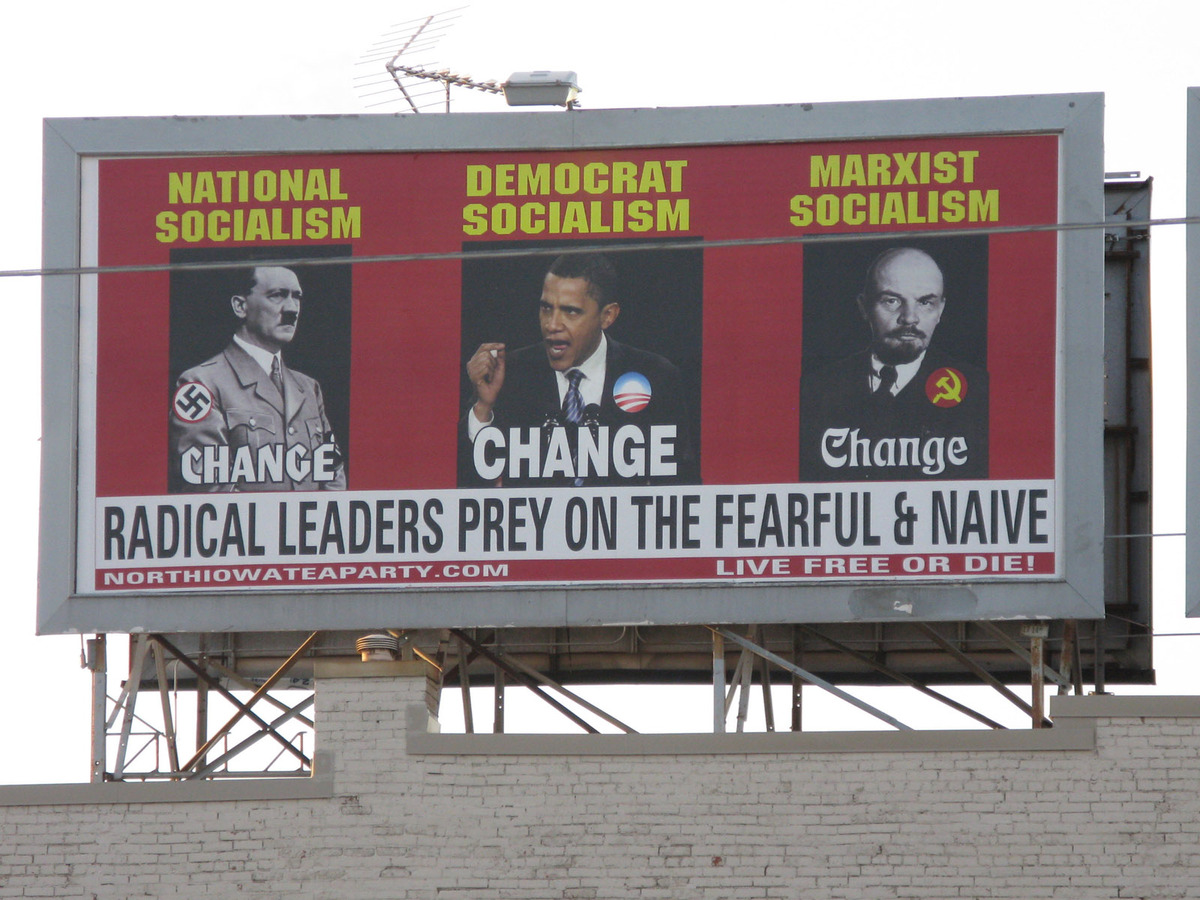
The Huffington Post clearly takes issue with such comparisons. It's not at all clear, however, whether they mind a bit when someone compares Lenin to Hitler. Well, I object to it. And I think Stalin was much, much worse than Lenin, but I also object when someone compares Stalin, or Mao, to Hitler. (Comparisons of Pol Pot and Hitler are valid. If you can find a Marxist or a Leninist who thinks Pol Pot was just great, please let me know. If you know of any Stalinists still living, that also would be news to me.) If you think Stalin was as bad, or worse, than Hitler, I've said it before, I'll very likely say it again: get Stalin: A Political Biography by Isaac Deutscher, the 2nd edition from 1966, read pages 566 through 569
and then get back to us, and if you haven't changed your mind, tell us where you think Deutscher is wrong. (Go ahead and read the whole book while you're at it, and other things by Deutscher, it will do you no harm.) If you think either I or Deutscher is praising Stalin as a glorious hero and role-model, well, you just haven't been paying attention, and I'm mostly likely going to shift my attention to people who are paying attention.And if you're one of those people who believe that Communist regimes have murdered 100 million people -- or if you believed it a decade ago and have revised that round number upward since then -- read this.
Subscribe to:
Posts (Atom)